
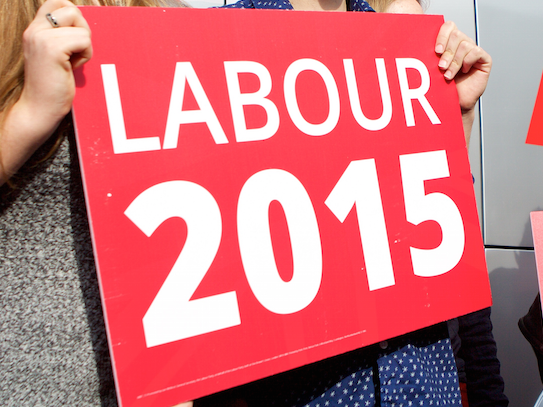
In June last year, soon after the general election, acting leader of the Labour party, Harriet Harman, got in touch. She wanted to commission voter research to help to understand why Labour lost. I, along with colleagues, Ben Shimshon and Cordelia Hay, undertook that work and conducted focus groups in places with particularly disappointing results (Croydon, Edinburgh, Glasgow, Nuneaton, Watford). Our report was intended to sit alongside Margaret Beckett’s review, finally released this week. However, it remains unpublished.
Reading Beckett’s report, I do not see much that brings to mind the stark findings from those swing voters (shared with her and co-author Alan Buckle, soon after completion). The document devotes considerably more space to defending Labour’s performance than it does to understanding why Labour lost. The opening ‘context’ section explains how tricky it was for Labour’s counternarrative to be heard above the noise of a coalition government with its built-in opposition; how much less cash Labour had; how uninterested the media was in Labour’s activities (apparently why its ‘well constructed’ policy agenda went unnoticed); and how ‘vitriolic’ the media’s attack on Ed Miliband had been.
The crucial ‘learning lessons’ section advises the new leader to ‘approach with caution’ theories for defeat that ‘sound plausible … but need to be nuanced and substantiated’. The charge that Labour is ‘too anti-business’ is rebutted with an assertion that ‘we are, of course, wholehearted supporters of a strong and responsible private sector’ and the response to the charge of being ‘too leftwing’ is that this is ‘not a simple discussion’ – although Beckett concedes the party’s failure to convert voters in demographic groups traditionally seen as ‘in the centre’. Meanwhile, the acknowledged reasons for defeat: economy, immigration, benefits, leadership and fear of the Scottish National party each warrant just one short bullet point.
Of course, the swing voters who took part in those focus groups last summer will not have noticed the report’s sotto voce publication, but, if they had, my guess is that they would see it as further evidence of the decline of a once great political force that had so effectively captured the public mood – our swing voters turned misty-eyed as they recalled the days of Oasis, Blur and a Labour that was ‘for the middle’ – but that they now readily designated as ‘uninspiring, unimaginative and in denial about its past’.
Voters’ analysis focused on broadly the same specifics as Beckett’s report, although their assessment of Labour’s performance was very different and certainly less forgiving. The negatives were vivid and powerfully felt. Management of the economy was top of mind, with Labour’s record, once election-winning, now described as ‘dismal’ at a time when most voters were feeling concerned about their own financial fortunes. Labour wasting money has become an incontrovertible truth, as had misplaced spending priorities, specifically, undeserving benefit ‘scroungers’. Voters have fully conflated the banking crisis – the personal impacts of which are clearly remembered – as if the crisis itself had had the effect of pulling back a curtain to reveal the ‘terrible truth’.
‘I think the banking crisis bought it all home, didn’t it? I don’t think in 2005 people knew how much we were borrowing. The numbers were so big that they just sort of wash over your head, but when the banking crisis happened started to hurt everybody it started to come out how we had no money and we were just borrowing and borrowing and borrowing …’ said one Nuneaton voter.
Almost more damaging, however, was the strong rejection of Labour as a political party that these voters could identify with, or that would be ‘on their side’. While Labour’s values were seen as ‘nice’ rather than ‘nasty’, voters struggled to see what those values meant in practice. There was a sense of policy proliferation, but few initiatives were recalled in detail, few met with enthusiasm and there was little conviction that Labour could actually deliver on its promises. Some interpreted this as Labour trying hard to please, effectively buying votes with little real conviction and no coherent vision.
‘Labour talk with more empathy but it’s hard to tell if that is what they really think. They aim to do good but I’m not sure if their policies will work out in the long run’, remarked one Croydon voter.
The Beckett review does not mention Scotland in the ‘lessons learned’ section (except as a turn-off to English voters), although the role of the referendum was stressed. Our post-election work clearly suggests that the disillusionment with Labour was reinforced but not caused by its stance in the referendum campaign. Instead we learned that Scottish voters had been feeling neglected by Labour for many years as swaths of talented Scots headed south to make their political careers, losing touch with Scottish issues and values. Labour, once an automatic choice, was now an irrelevance, set firmly in the past.
‘You didn’t think about voting Labour, you just did it. Your ma and da did it and their parents before them – it wasn’t a thinking choice. But voting SNP this time I had my eyes open and my brain in gear’, recalled one Glasgow voter
We chose not to dwell much on Miliband’s leadership, preferring to focus on issues that the future leader could address, but there is no doubt that his leadership was a major problem. To some, he was the personification of Labour’s well-meaning but ineffectual brand, and keeping him out of No 10 was a strong motivator for those voters. Analysis shows that the party with the more favourable leader ratings always win, and 2015 was no exception.
So does it matter that the Beckett report dodges the question it set itself? I think it does. As Beckett herself points out, Labour’s challenge will be even greater in 2020, after boundary changes and as the population grows older. Without fully understanding why voters have abandoned the party, it cannot hope to address their concerns and win them back. No political party has the divine right to exist and this missed opportunity places Labour’s future in profound jeopardy.
———————————
Deborah Mattinson is a founding director of BritainThinks
———————————
I’m still none the wiser as to what it is you object to about the content of the Beckett Report. It agrees with your polling findings, but you seem annoyed that it doesn’t take a sufficiently pessimistic tone for your liking. That’s not much of a justification for calling the report a ‘whitewash’.
Overall, I can’t shake the impression that your complaint here seems motivated more by a sense of grievance that your research hasn’t been given the prominence that you wanted it to be given. I don’t doubt that BritainThinks does excellent research, but it is decidedly odd to gripe about a report whose conclusions match those of your own enquiries. No-one who has read the Beckett Report can reasonably conclude that it is minimising the problems that Labour faces.
The key line for me is that swing voters found Labour ‘uninspiring, unimaginative and in denial about its past’. Jeremy Corbyn won because he offered renewal. The Bourbons who form the Labour establishment – learning nothing and forgetting nothing – turned three able young people into the zombie candidates of the leadership campaign through decades of repressing any original thought. They brought disaster on themselves but insist on blaming other people – such as 400,000 members – for it.
You’re confusing the electorate at large and the Labour leadership selectorate. The electorate thinks we’re doing worse on their key issues of the economy, immigration and welfare since the election. This is not ‘renewal’. It’s doubling down on failure
By “doubling down on failure” I suppose you mean the old regime losing two elections in succession. It saddens me that the Bourbons, having built their whole approach on winning elections above all else, should still be insisting that everything must still be done their way. It’s like M&S refusing to accept credit cards.
The methodology of the Blair/Brown/Balls years was to find out what focus groups wanted and adopt it as policy – which led to increasingly desperate efforts to suppress dissent. They failed to consider that the role of any lasting political party is to lead opinion not just follow it. And in fact people’s views can be very fluid. A single dramatic photograph can prompt massive shifts of opinion.
Labour should always be working to lead society in a more left and liberal direction. For example, they should have resisted the Tory mantra of “the mess Labour left behind” and hammered home the real cause of the 2008 crash and continuing stagnation in the evil maldistribution which characterises the modern economy. The failure to do that was probably the biggest single cause of the 2015 defeat. That’s why renewal is needed and 100,000s of members seized on Corbyn as the way to achieve it.
You can’t lead society in a more left and liberal direction on policy if voters don’t trust you enough on the issues of most salience to them. Shouting facts ever more loudly at them without having a deep understanding of their perceptions and motivations (and therefore the changes that need to be made to policy and framing of messages) is electorally futile. Increases in membership are great but they are not bearing out at the ballot box – we’re going backwards pretty much everywhere except London
Had anyone but Corbyn become the new Labour leader, the party would have continued it’s path of denial. That Balls lost his seat tells you that his electorate didn’t trust him enough to re-elect him, yet, Millband wanted him as C of Ex, a dreadful misjudgement which all voters, regardless of persuasion, could not endorse. The specifics of the damning defeat are the main reasons, not the generality of the report. Effectively, the report seeks not to offend, a matriach not wishing to damn her offspring!
Interesting observation re: loss of Ed Balls’ seat, especially as he campaigned on an austerity light ticket whereas neighbour Richard Burgon won on an anti-austerity strategy. I think we were not vocal enough on the anti-austerity options, which would have more broadly appealed and may well have secured more seats in Scotland.
For sure we will be sure to lose if we do not stop this ridiculous back-biting and briefing of media against the new leadership, and you can guarantee that the same individuals would be quick to blame everyone but themselves.
What I found in my Ward was that the Leader was seen as poor. Our policy platform was incoherent and confusing. The Tory scare about EM being in coalition with SNP really frightened voters. We were wrong on immigration and the EU.
The fact that the Beckett report is not comprehensive underlines a major flaw in Labour, we have always fudged difficult issues. We cannot keep ducking the fundamental challenges. We face an existential threat. If we know longer become relevant to voters we’ll disappear. We have a momentum for self destruction.0
A few days ago new McLaren F1 subsequent after earning 18,512$,,,this was my previous month’s paycheck ,and-a little over, 17k$ Last month ..3-5 h/r of work a day ..with extra open doors & weekly. paychecks.. it’s realy the easiest work I have ever Do.. I Joined This 7 months ago and now making over 87$, p/h.Learn More right Here
vd….
➤➤
➤➤➤ http://GlobalSuperEmploymentVacanciesReportsNew/GetPaid/98$hourly…❦.❦.❦.❦.❦.❦.❦.❦.❦.❦.❦.❦.❦.❦.❦.❦.❦.❦.❦.❦.❦.❦.❦.❦.❦.❦.❦.❦.❦.❦.❦.❦.❦.❦.❦.❦.❦
I spent 25 years in advertising, specialising in Strategic Campaigns. Advertising is much misunderstood by most people, who credit it with the impossible – making people buy something they don’t want. Well, you can get them to do it once, but never twice. In fact the best way to kill a bad product is a great ad campaign. But the most important aspect of Strategic campaigns is that they aim to get the perception of the brand from A to B, where A is: “What do they think of us now?” and B is: “What do we want them to think of us?”
The single greatest reason for the failure of any campaign was always the refusal of the client to recognise Position A. If the client will not accept the correct assessment of Position A, the campaign is doomed. It CANNOT succeed, because the subsequent message is necessarily (and always) wrong. If Position A is unacceptable for philosophical reasons, you don’t even start to repair the damage…
Maybe you should offer your services, though as you sound like you know what you’re on with you’d be a bad fit for Labour in its current nervous breakdown.
Looking on the bright side, Axelrod took fright at what he saw and scuttled back over the pond, and they bunged him a cool quarter of a million for a couple of emails – nice work if you could get it!
Tell us what position A is for the Labour Party as it seems to me, as a member, that we have gone from non recognition of position A to -A (ie, back to the future).
Position A is somewhere in: “They didn’t vote for us because they didn’t want to. They didn’t want to because they think we let them down last time. They may be wrong about some of the details, but they are not wrong in the main idea – they never are.”
From there, you have two choices: a) “Sorry, we won’t do that again.” or: b) “Oh no, actually we didn’t at all…” A wins every time, because B implies that they were “wrong” not to vote for Labour, and that Labour was “right”. That won’t work.
But it’s worse than that because they seem to think Position A is: “We didn’t let anybody down, or make any mistakes, we only lost because of a media plot. So we’re now going to do lots more of what they didn’t like last time, and if we can only beat the evil media we’ll win.” Um, yeah, er, no.
Look, it’s quite simple:
1) Economy
2) SNP
3) Ed Miliband
To expand on this, Labour had nothing to offer vast swathes of the electorate. All it had was more welfare, new taxes and anti-business laws. All Labour wanted to do was to shovel more cash into the hands of welfare claimants and into the pockets of NHS managers. Nothing else. It refused to admit overspending under Blair and Brown, in fact it was proud of doing so. It refused to admit any responsibility for the recession.
And now Labour want to make Jeremy Corbyn their next Prime Minister. Good luck with that.
If you read the post election analyses of profs Jane Green at Manchester and John Curtice at Strathclyde, you’ll find that both concluded that fear if the S.N.P had a minimal effect on the behaviour at the polls of voters in rU.K.
I would suggest more than minimal. There have been reports of canvassers of previously Labour supporters stating they refused to be pushed around by the rabid Scots Nats.
It was clear that Labour would be wiped out on Scotland quite early on and so Labour would need the SNP of there was a hung Parliament.
Bear in mind that this was a case of one opposition party giving away seats to another. The Tories were not serious contenders in this race.
And the SNP were explicit about joining forces with Labour to ‘lock Cameron out of No.10’.
It is beyond belief that this would not have an effect. Especially after the behaviour of SNP supporters during the referendum and after. They were disgraceful.
Well, the research doesn’t bear you out.
Re the “behaviour of S.N.P. supporters” being “disgraceful” that’s just rubbish. Where did you see this?
“Well, the research doesn’t bear you out.”
…because all the research before the election was soooo accurate so the research after the election must be just as good. I am sure that is how it works.
“Re the “behaviour of S.N.P. supporters” being “disgraceful” that’s just rubbish. Where did you see this?”
It was on every news channel in this country, obviously south of the border.
You damage your credibility if you fail to accept that the Yes side in the referendum played very dirty indeed.
If you choose not to accept credible sources that’s your problem. I don’t know about prof Green, but Curtice is not widely seen as a friend to the independence movement. The conduct of the referendum campaign was widely lauded for the way it was conducted, by , for example, John Kerry. As someone who lives here, I can promise you it’s an accurate summation.
I stopped voting Labour, when Blair signed UN Agenda 21 in Rio 1997. This is the NWO guideline, which has just been given a dose of Steroids with Agenda 2030; http://www.zerohedge.com/news/2015-09-29/un-just-unleashed-global-goals-elites-blueprint-united-world
The Labour party have forgotten what ‘working class’ actually means, Blair failed to Repeal the Anti-Union laws, and their support for Corporations above local Business is eye-watering. If we don’t leave the EU, we wont be having Elections in 2020, as via TTIP we will be controlled by Corporate Tribunals from Brussels.
On 31/3/2017 we become Fully Integrated and on 1/4/2017 [ALL FOOLS DAY] the new QMV rules come in. Next up is 1/1/2020 when we become REGIONS of the EU http://www.europarl.org.uk/en/your-meps.html – Tell me, if MEP’s control the ‘Regions’, what happens to MP’s? Are they to be “well paid off”? This is why Cameron said “I shan’t seek a third term” he knows we wont be self-governing. The House of Parliament will re-open as the ‘grandiose’ London Regional Seat, to rival Hollyrood and Hilsborough.
I find the Beckett report comprehensive – it encompasses many of the comments already made here. I read it as endorsing the conclusions now reported by Deborah Mattinson, but including other context.
I cannot avoid the thought that criticism of the report is mischievous against the need to develop the only possible strategy: to unite behind the only Leader we have to get over new messages on the economy about stagnation, austerity, and how to promote growth esp in the lagging regions, and so on with the other issues. A no-no strategy is to evaluate policies not judged on whether they are ‘left’ or ‘right’, ‘extreme’ or ‘moderate’, but whether they might work and whether the voters like them or can be persuaded to.
In particular we need the whole PLP to listen to voters on these issues with open minds. How come so few Labour MPs seem to support re-nationalisation of public utilities and transport when polls show this to be popular? Or firms being forced to pay really living wages, or sharing profits with staff, or indeed to pay their taxes like the rest of us? And if the PLP knows better, can it explain why public alienation from politics is so strong? Could it just be that none of the major parties has been offering what the public wants?
It seems to me the author (Mattinson) is leading the reader to assume that Labour were borrowing too much and overspent because of the feedback of Beckett’s report and what voters said at the doorstep; specifically one voter in Nuneaton.
Yes voters did not trust Labour because they were frankly brainwashed by my Party the Conservatives and our pals in the media including the BBC. What do expect when Labour MPs are constantly asked: when are you going to apologise for the deficit, structural deficit and overspending? Viewer naturally jumps to the conclusion the BBC are asking the Labour MP to apologise because it must already be a proven fact. Its a loaded trick question designed to lead people to jump to that conclusion – it must already be a proven fact. In addition, when every Labour MP ignored the question, had a blank expressions and said nothing it lead viewers to naturally conclude the MPs none response was an acceptance Labour were to blaim.
However, I do not believe any voter actually said :
‘I think the banking crisis bought it all home, didn’t it? I don’t think in 2005 people knew how much we were borrowing. The numbers were so big that they just sort of wash over your head, but when the banking crisis happened started to hurt everybody it started to come out how we had no money and we were just borrowing and borrowing and borrowing …’ said one Nuneaton voter.
Its as if this voter actually knew the specific numbers and to state 2005 as the starting point is leading reader to believe that this is when Labour started to over borrow like a drunken sailor. This is a classic case of author saying: Look you won’t believe me but look at what a nuneaton voter said.
The fact are:
1) 1979-97 We Tories were borrowing yearly on average 3.3%. Then after 1997 Brown reduced it to 0.9% yearly before the recession 2008. Moreover, he also cut borrowing by 32% from 1997- 2008.
2) 1979-1997 We Tories increased the structural deficit by +29%; The Labour cut it by 82% before 2008. The Structural Deficit is a more precise measurement of what government spent in the previous period.
3) 1979-1997 We Tories increased the deficit by +50%; Then Labour cut it by 85% before 2008. See huff.to/1LhDIjs for the facts.
There was no need to apologise for the structural deficit because it would amount to apologising for the grass being green or the sky being blue. Why? Deficits have occurred in nearly every year since records began 300 years ago. Deficits, structural deficits & govt borrowing are the norm. In fact on the IMF measure we Tories ran 18 structural deficits in 18 years 1979-97. That is why we economist use the terms the deficit increased, decreased, fell anything but overspending because deficits are the norm and cannot be permanently eliminated. Overspending is a loaded term to mislead people to assume deficits rarely occur. The bottom line do not accept the blame or Labour will be the only reason why you will lose in 2020 – 2030.